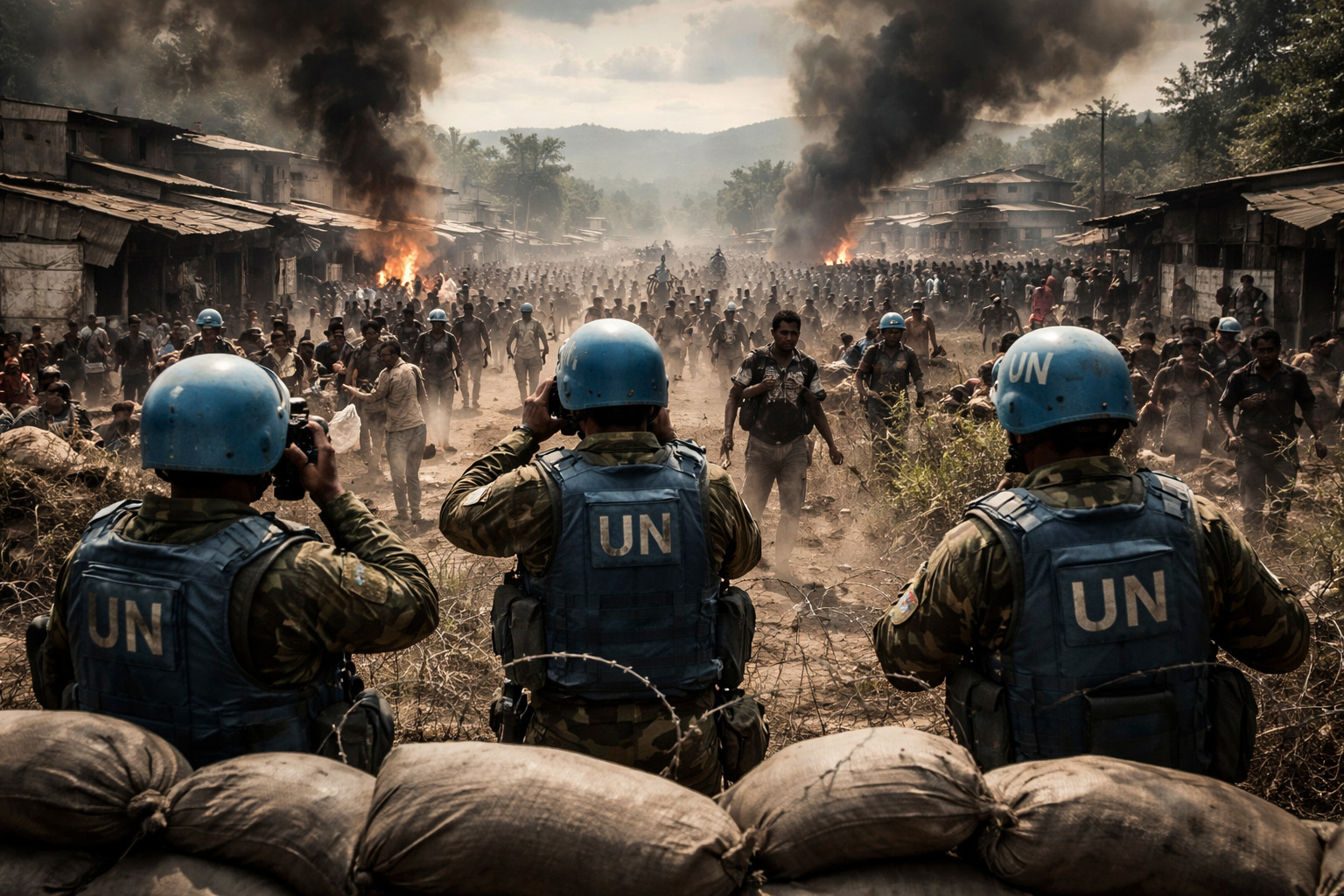
The landscape of global conflict has shifted. Traditional peacekeeping was designed for a world where two nations have agreed to stop fighting. Today, missions are deployed into "unending horror stories" where there is no central authority, no consent, and no clear path to peace.
Africa and Southeast Asia: The Crisis of Fragmented Conflict
In Sudan, the civil war between the SAF and RSF has left over 30 million people in desperate need of aid. Because the warring parties view peacekeepers as targets rather than facilitators, international efforts are routinely overwhelmed. Similarly, in Myanmar, the military junta faces over 1,200 fragmented armed groups, making a unified peace deal practically impossible to negotiate.
The Global Peacekeeping Deficit (2024–2026):
- Funding: Many humanitarian missions receive less than 25% of the necessary budget.
- Complexity: Over 1,200 separate armed entities in Myanmar alone.
- Scale: 30+ million people displaced or in need in the Sudan region.
The Sahel and Haiti: Ideology and Criminality
In the Sahel (Mali and Burkina Faso), Islamist insurgencies reject negotiated settlements entirely. Traditional UN forces like MINUSMA have been forced to withdraw as local governments turn to private contractors for direct combat. In Haiti, the situation has devolved into gang-controlled anarchy. Traditional "blue helmet" missions are ill-equipped to fight criminal networks that operate without a political command, leading to a total security vacuum.
— Mark 7:21, 22
A Systemic Failure of Human Rulership
These failures are not just logistical; they are systemic. Human governments are limited by budget shortfalls, narrow mandates, and shifting political loyalties. When the UN Security Council cannot distinguish between the victim and the aggressor, peacekeeping becomes a hollow gesture that may even become complicit in the ongoing suffering.
— Proverbs 16:9
The Solid Solution: A Unified Government
The Bible explains that the only solution to such fragmented chaos is a government that does not depend on human consent or the cooperation of leaders. God’s Kingdom is the only authority capable of dismantling the non-state militias, removing the ideological roots of terror, and restoring statehood to a broken earth.
— Zechariah 9:10
Unlike human missions that are underfunded and overstretched, God's Kingdom possesses unlimited resources and a perfect mandate. It will not merely "suppress" gangs or "monitor" ceasefires; it will remove the conditions that produce them—poverty, greed, and the lust for power.
— Daniel 2:44
In a world of fragmented wars, God’s Kingdom will deliver the only unified hope. It is a government that brings not just a temporary pause in violence, but a lasting, universal peace that will never fail.