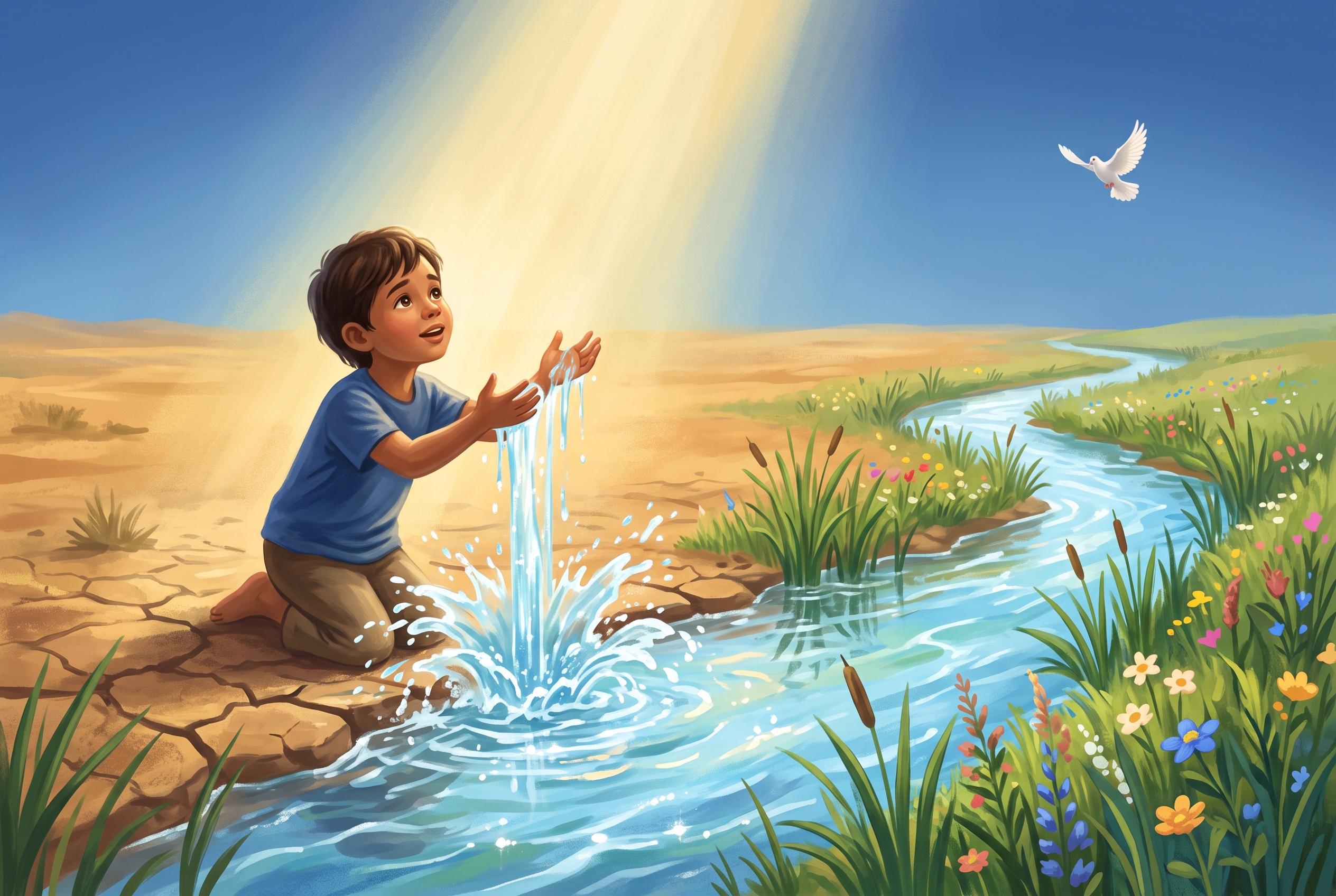
Water is the most basic requirement for human life. Yet in 2024, according to the WHO/UNICEF Joint Monitoring Programme, one in four people on earth — some 2.1 billion — still lacked safely managed drinking water. Among them, 106 million people drink directly from untreated rivers, ponds, and lakes, sharing that water with animals and waste.
There has been genuine progress. Between 2015 and 2024, 961 million people gained access to safely managed water, lifting global coverage from 68 to 74 percent. But the UN World Water Development Report 2026 adds a sobering detail: women and girls still spend an estimated 250 million hours every single day simply collecting water — time stolen from school, work, and family.
The Widening Gap
The burden is not shared evenly. In fragile and conflict-affected countries, safe-water coverage runs 38 percentage points below the rest of the world. Where governance breaks down, so do the pipes, pumps, and treatment plants that clean water depends on. Rural communities lag far behind cities. And climate shocks — drought in one region, flooding in another — repeatedly undo years of patient infrastructure work.
The Global Water Crisis (WHO/UNICEF 2024):
- Without safe water: 2.1 billion people — 1 in 4 worldwide.
- Drinking surface water: 106 million people rely on untreated rivers and lakes.
- Time lost: Women and girls spend an estimated 250 million hours a day collecting water.
- Progress: 961 million gained safe water from 2015–2024, raising coverage from 68% to 74%.
- Inequality: Coverage in fragile contexts is 38 percentage points lower than elsewhere.
Why the Problem Persists
The earth is not short of water — most of the planet's surface is covered by it. The difficulty is delivering clean, safe water to every person, reliably, forever. That requires stable governments, sustained funding, peace, and honest administration over generations. Wars destroy water systems. Corruption diverts the money meant to build them. Poverty leaves communities unable to maintain what they have. Each of these is a human failure, not a natural one.
— Isaiah 41:17, 18
The prophet Isaiah described exactly the situation the world faces today — the poor searching for water that is not there — and then pointed to a solution that no aid agency could offer: the direct action of the Creator to transform the land itself.
A Promise of Water That Never Fails
The Bible repeatedly uses water as a symbol of the life and refreshment that God's Kingdom will bring. But it also speaks of literal, physical restoration — deserts made to flow, the thirsty satisfied.
— Isaiah 35:6, 7
Under human management, providing water is a perpetual struggle against decay, disaster, and cost. Under God's Kingdom, the very geography of scarcity is reversed. What is dry becomes abundant. The Bible presents this not as a temporary relief program but as a permanent transformation of the earth's ability to sustain its people.
— Revelation 21:6
Free, For Everyone
Notice a detail human systems can never match: the water is given "free." No family will be priced out. No community will be neglected because it is remote or politically unimportant. The barriers that keep clean water from 2.1 billion people today — cost, conflict, corruption, and distance — will simply no longer exist.
Aid organizations are reaching millions with clean water, and their work saves lives. But they are the first to admit that needs are outpacing resources and that fragile regions keep slipping backward. The Bible points to something they cannot provide: a government under which every person on earth will have safe water, permanently, at no cost — because the One providing it owns the springs of the planet itself.