The world set itself a goal: to end extreme poverty by 2030. As that deadline nears, the World Bank's 2025 figures show how far out of reach it remains. Roughly 808 million people — about one in ten of the human family — are projected to be living in extreme poverty, surviving on less than US$3.00 a day. And the trend line has flattened. The rapid gains of earlier decades have slowed to a near standstill.
The reasons are familiar: the lingering economic damage of the pandemic, conflict, climate shocks, and sluggish growth. More than three-quarters of the world's extreme poor now live in sub-Saharan Africa or in fragile, conflict-affected countries — precisely the places where weak governance makes lasting progress hardest to achieve.
Extreme Poverty (World Bank, 2025):
- Scale: About 808 million people — roughly 1 in 10 worldwide — in extreme poverty.
- Threshold: Surviving on less than US$3.00 per day (updated international poverty line).
- Progress: Stalled — eradication by 2030 now considered highly unlikely.
- Concentration: Over three-quarters live in sub-Saharan Africa or fragile, conflict-affected states.
Why the World Cannot Close the Gap
It is not for lack of wealth. The world has never been richer, and global output rises almost every year. The problem is distribution. Wealth concentrates where power and stability already exist, while the poorest are trapped in a cycle of conflict, corruption, debt, and disaster that no amount of aid seems able to break. Development programs achieve real gains, then a war or a drought erases them. As the World Bank's own projections make clear, human systems are not on course to finish the job — and in many regions they are losing ground.
— Psalm 9:18
The Bible never treats poverty as acceptable or inevitable. It repeatedly condemns the neglect and exploitation of the poor, and it promises that their situation will not be permanent. But it locates the true remedy not in human charity — valuable as that is — but in a change of government.
A King Who Rescues the Poor
The Bible describes God's appointed King in terms that no political manifesto has ever fulfilled. His defining priority is the rescue of the poor and the powerless.
— Psalm 72:12, 13
Human leaders promise to help the poor, but they answer to donors, markets, and voters, and their reach ends at their borders. This King rules the entire earth and owes nothing to any special interest. His concern is not selective. Those "who have no helper" — the very people the global economy leaves behind — are the ones he is specifically committed to save.
Security, Not Just Survival
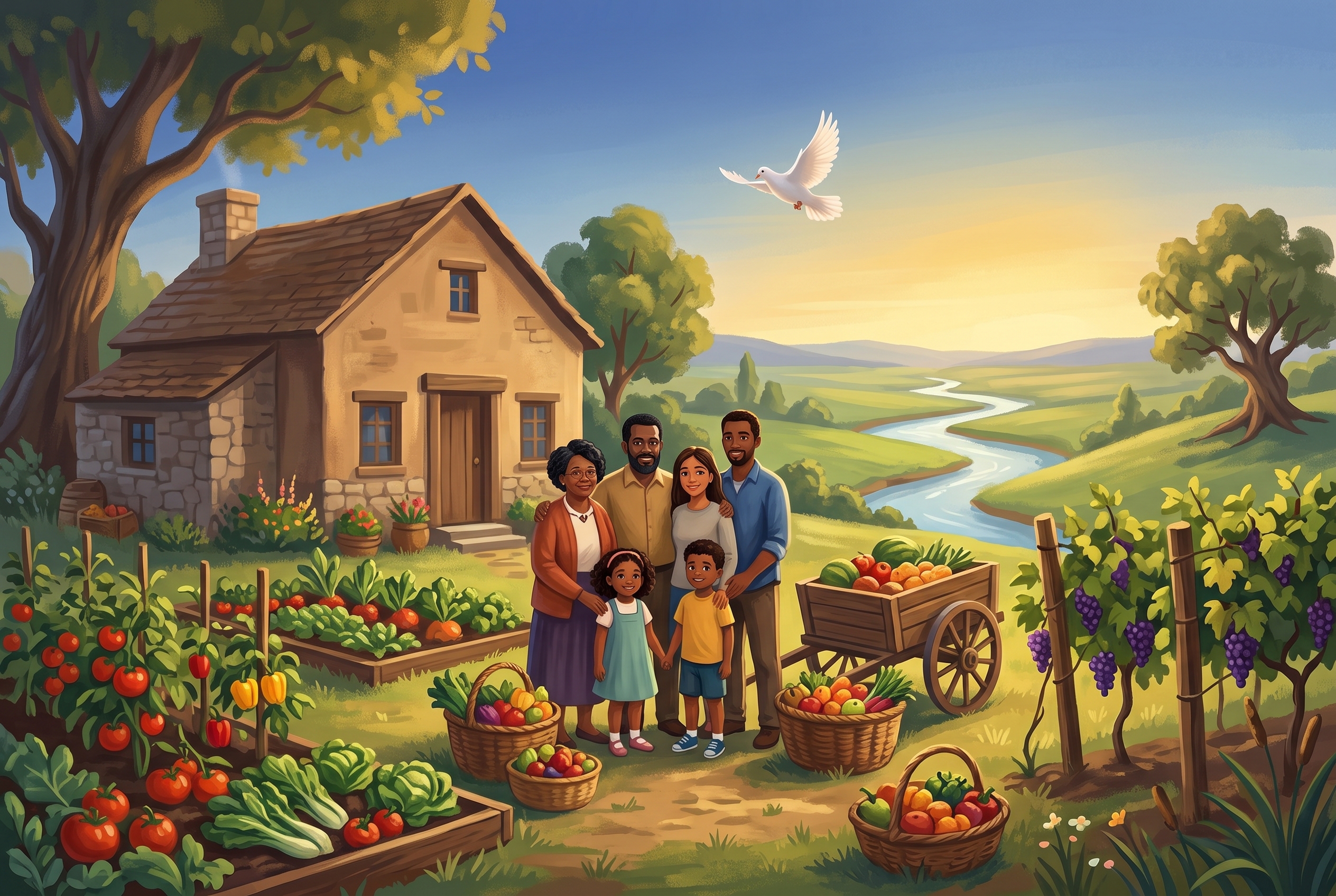
The Bible's promise is not a minimum subsistence just above a poverty line. It describes genuine security and dignity — every person enjoying the fruit of their own labour, free from the fear of losing it.
— Isaiah 65:21, 22
This is the opposite of extreme poverty. Not a handout, but ownership. Not survival, but abundance. And it is made possible by the removal of the very forces that create poverty — greed, war, exploitation, and misrule.
— Psalm 72:16
More than 800 million people are still waiting for the progress that has stalled. Governments and aid agencies continue their work, lifting some out of poverty even as others fall back in. But the Bible points to a government that will not merely reduce poverty — it will end it, permanently, for everyone. That is a promise no economic forecast has ever been able to make.