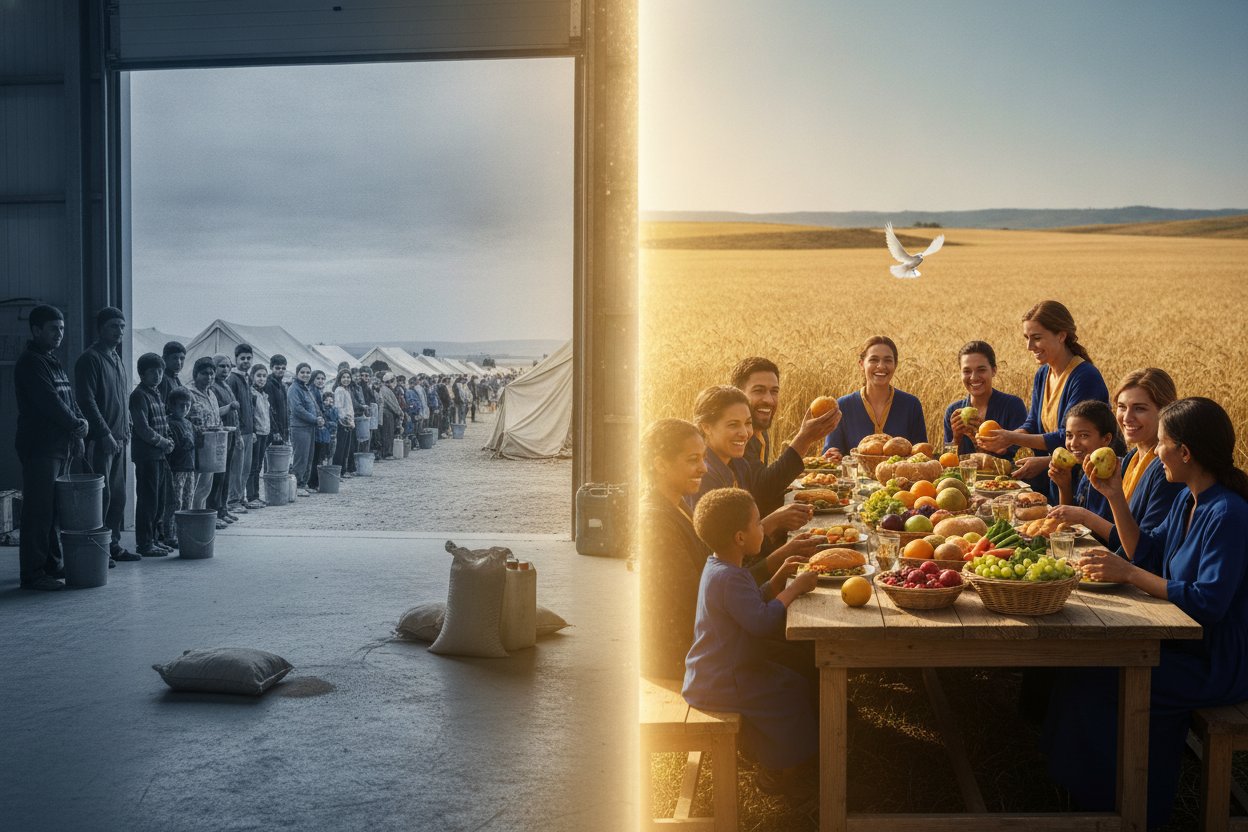
For decades, the world's humanitarian system has been a lifeline for people caught in war, famine, and disaster. In 2025, that lifeline began to snap. According to the UN Office for the Coordination of Humanitarian Affairs (OCHA), funding for the 2025 global humanitarian appeal reached only $12 billion — the lowest in a decade — and aid workers reached 25 million fewer people than the year before.
OCHA reported that the consequences were immediate: hunger surged, health systems came under crushing strain, schools closed, and families lost shelter, cash assistance, and protection services. For 2026, the UN launched an appeal for $33 billion to reach 135 million people, and then narrowed its focus to a "hyper-prioritized" plan of $23 billion to save 87 million lives. By March 2026, less than $9 billion of that had been secured.
The Humanitarian Funding Crisis (UN OCHA):
- 2025 funding: $12 billion — the lowest in a decade.
- Lost reach: 25 million fewer people helped in 2025 than in 2024.
- 2026 appeal: $33 billion to reach 135 million people.
- Life-saving core: $23 billion prioritized to save 87 million lives.
- Shortfall: About $14 billion of that core still unfunded in March 2026.
Compassion That Depends on Budgets
Humanitarian workers are among the most dedicated people on earth, often risking their lives to deliver food and medicine. But their work depends on the shifting priorities of donor governments. When budgets tighten or political winds change, aid is cut — and the poorest people on earth pay the price. The UN has been forced to decide which lives it can afford to save.
— Psalm 146:3
The Bible wisely cautions against placing complete trust in human rulers. Even when they mean well, their resources are limited and their commitments can change overnight.
A King Who Never Turns Away
In contrast, the King of God's Kingdom will never run short of resources or compassion. During his ministry on earth, Jesus fed thousands with just a few loaves and fish — a preview of what he will do on a global scale.
— Psalm 72:13
His care will not depend on budgets, donor conferences, or political will. Every person in need will receive what they need, because the Creator of the earth has unlimited power to provide.
No More Appeals
Under God's Kingdom, humanitarian appeals will no longer be necessary, because the causes of humanitarian crises — war, famine, and disaster — will be gone.
— Psalm 72:16
The world should be grateful for every aid worker and every donor who has kept people alive. But the collapse in funding has exposed how fragile human compassion becomes when it relies on human systems. The Bible promises a government whose generosity will never run out — and a world in which no one will ever again wait in vain for help.