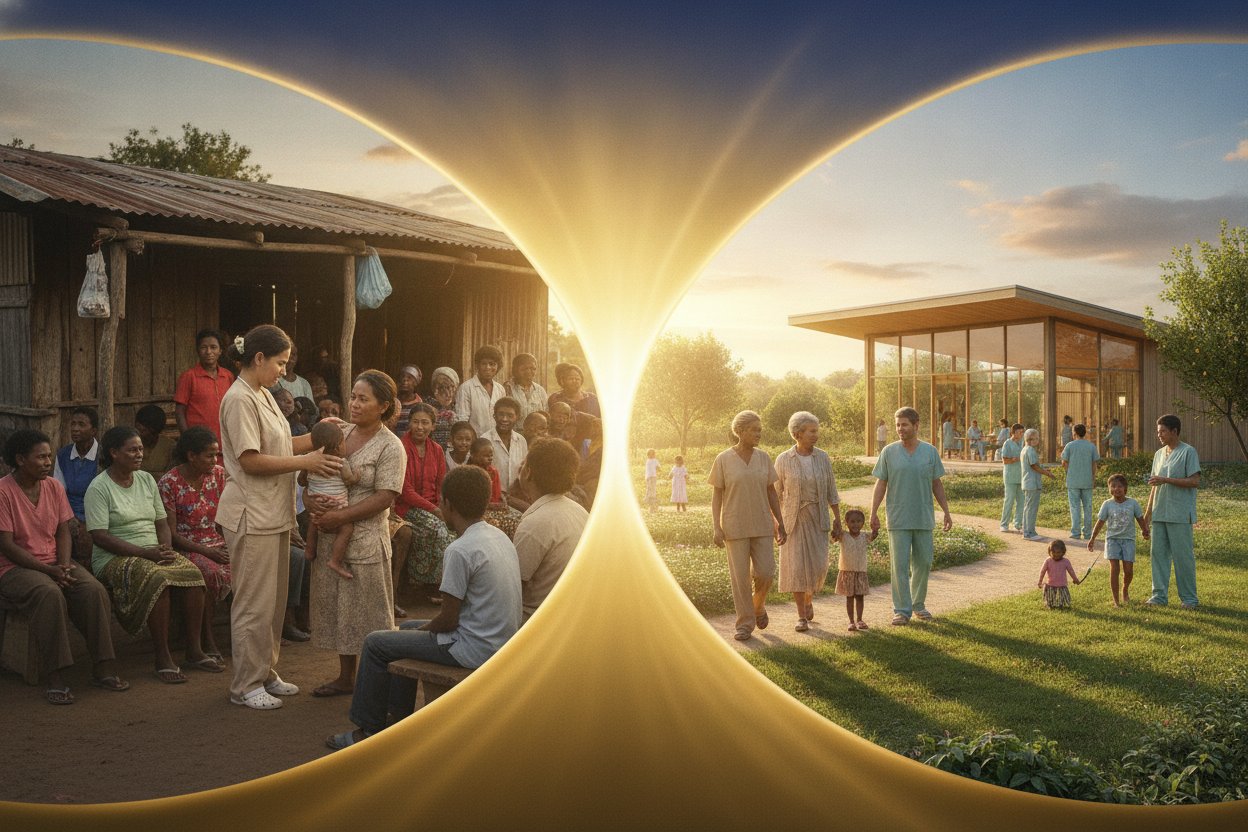
Medical workers provide comfort, treatment, and lifesaving care every day. Yet the people needed to sustain health services are in increasingly short supply. In an October 2024 update, the World Health Organization warned of a projected global shortfall of 10 million health and care workers by 2030, describing the situation as a health security vacuum (WHO, 2024).
The shortage is not shared equally. The WHO reported that sub-Saharan Africa alone needs 15 million additional health workers to achieve basic health goals (WHO, 2024). At the same time, many caregivers are exhausted by overwhelming workloads and difficult conditions. “The health workforce is the backbone of every health system, and yet it is being neglected and underfunded to the point of collapse,” the WHO stated (WHO, 2024).
The Global Health Worker Crisis (WHO/ICN, 2024):
- Worldwide shortfall: The world is projected to be short 10 million health and care workers by 2030 (WHO, 2024).
- Urgent regional need: Sub-Saharan Africa needs 15 million additional health workers to reach basic health goals (WHO, 2024).
- Caregivers under strain: One in three health workers worldwide reports burnout or significant mental-health challenges (WHO, 2024).
- Unequal distribution: The world’s wealthiest countries, home to 15% of the population, have 80% of the global nursing workforce (ICN/WHO, 2024).
- Little progress where needs are greatest: The health-worker gap in low-income nations has seen no reduction over the past decade (WHO, 2024).
Why Essential Care Remains Unequal
Governments, hospitals, training programs, and aid organizations all recognize the importance of a skilled health workforce. However, they face limited budgets, competing national priorities, and the continuing movement of trained workers toward better-paid positions in wealthier countries. This can strengthen medical services in one place while leaving clinics and communities elsewhere with too few people to provide even basic care.
Ecclesiastes 4:9, 10
This principle highlights how people need one another, especially in times of weakness. Yet the WHO reports that one in three health workers globally is experiencing burnout or significant mental-health challenges (WHO, 2024). When caregivers themselves are overwhelmed, even devoted professionals cannot meet every need. The fact that low-income nations have made no progress in reducing their health-worker gap over the past decade shows how difficult it is for divided human systems to provide dependable care for all (WHO, 2024).
A King Who Rules With Justice and Compassion
God’s Kingdom will provide the united, compassionate government that human institutions have been unable to establish. Its King, Jesus Christ, will rule with complete understanding of every person’s needs. His administration will not be shaped by national borders, unequal wealth, or competition for trained workers. Those who are ill, vulnerable, or unable to obtain help will never be forgotten.
Isaiah 32:1
Righteous rule means that no community will be considered less important because it is poor or remote. Under God’s Kingdom, care and protection will not be limited to those who can afford them or those who live where medical resources are concentrated. Christ’s rule will reflect God’s deep concern for human life and well-being.
Lasting Health and Security
The present shortage affects more than hospitals and clinics. It can leave families anxious when a child, an elderly parent, or a neighbor needs help that is unavailable. The unequal distribution of nurses is especially revealing: 80 percent of the global nursing workforce is concentrated in the wealthiest countries, which account for only 15 percent of the world’s population (ICN/WHO, 2024). Such imbalance cannot bring genuine health security to everyone.
Isaiah 33:24
Health workers deserve appreciation for the demanding, compassionate work they do, and efforts to train and support more caregivers can provide real help today. Still, the projected shortage of 10 million workers by 2030 demonstrates the limits of human planning (WHO, 2024). God’s Kingdom will bring the lasting health and security that people need, removing the fear that medical care will be beyond reach when it is needed most.