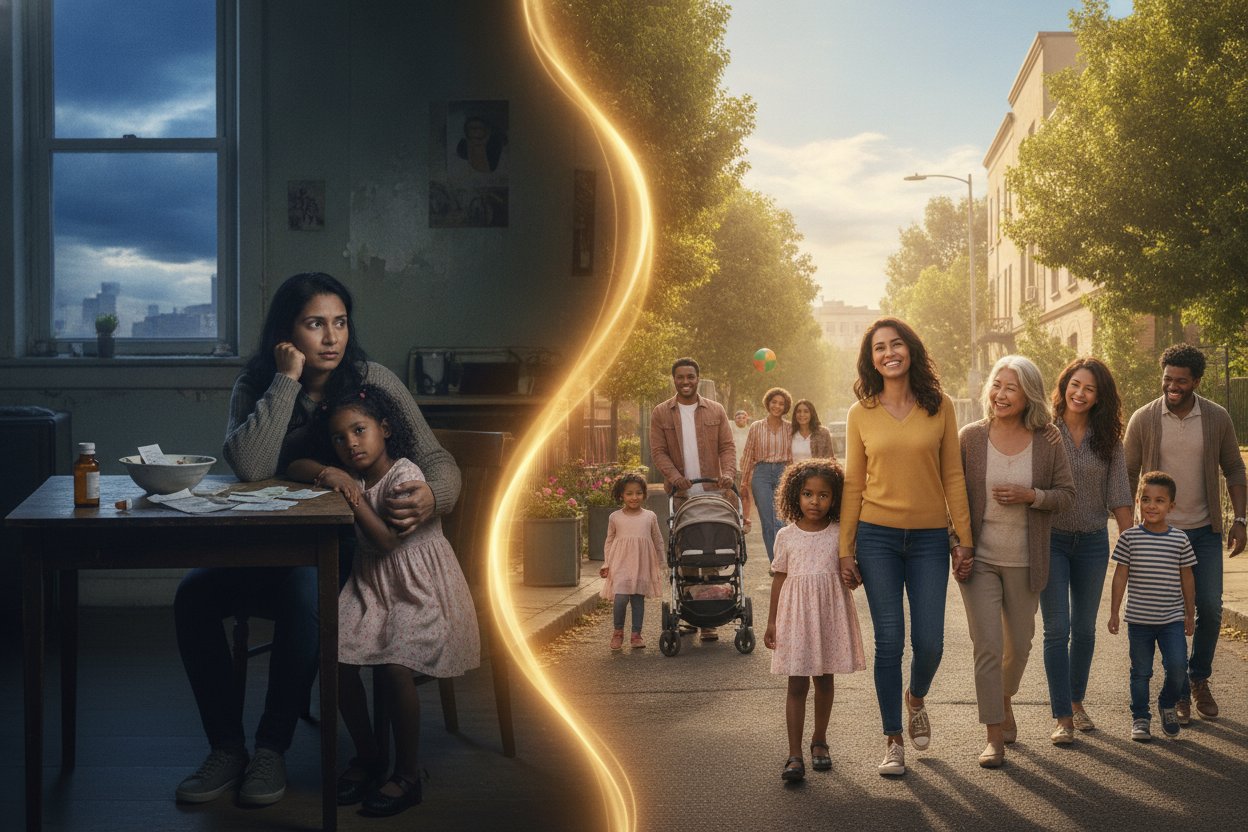
Illness, unemployment, pregnancy, and old age can bring serious financial pressure to any family. Social protection programs, including pensions, unemployment benefits, and healthcare, are meant to provide a measure of security during such times. Yet UN Women reported on October 15, 2024, that two billion women and girls worldwide have no access to any form of social protection (UN Women, 2024).
The report, World Survey on the Role of Women in Development 2024, shows that this is not simply a lack of convenience or opportunity. For many women, it means facing a health crisis, loss of work, or childbirth without dependable support. UN Women observed: “The potential of social protection for gender equality, resilience and transformation is clear... yet 2 billion women and girls are being left behind” (UN Women, 2024).
The Global Social Protection Gap (UN Women, 2024):
- Billions without a safety net: Two billion women and girls worldwide lack access to any form of social protection, including pensions, unemployment benefits, or healthcare (UN Women, 2024).
- Limited support during childbirth: More than 63% of women globally give birth without access to maternity benefits (UN Women, 2024).
- An especially severe regional gap: In sub-Saharan Africa, 94% of women give birth without maternity protection (UN Women, 2024).
- Young women face greater poverty: Women aged 25 to 34 are 25% more likely than men in the same age group to live in extremely poor households (UN Women, 2024).
- Conflict intensifies hardship: Women in fragile or conflict-affected settings are 7.7 times more likely to live in extreme poverty than women in stable environments (UN Women, 2024).
Why Basic Security Remains Out of Reach
Governments and international bodies have long recognized the need for a basic level of protection for every person. However, establishing and maintaining such programs requires stable institutions, sufficient resources, accessible healthcare, accurate administration, and cooperation across society. Where poverty, conflict, displacement, or weak public services are present, those protections can be unavailable precisely when they are most needed.
Deuteronomy 15:7, 8
This direction reflects God’s concern that people in need should receive practical help. Human institutions may sincerely seek to provide that help, but their efforts are often limited by unequal resources, changing political priorities, and instability. The consequences are particularly severe for women affected by conflict. UN Women found that women in fragile or conflict-affected settings are 7.7 times more likely to live in extreme poverty than those in stable environments (UN Women, 2024).
A Government That Protects Every Person
God’s Kingdom will provide the dependable government that human systems have not been able to achieve. Jesus Christ, its King, will rule with perfect justice and compassion. His government will not be divided by national borders, weakened by conflict, or limited by a shortage of resources.
Zechariah 9:10
Under God’s Kingdom, no woman, child, elderly person, or unemployed worker will be treated as an overlooked number in a report. Christ’s rule will bring the stable conditions needed for people to live with dignity and confidence. Care for those who are vulnerable will be a permanent feature of his just administration.
Hope for Real Economic Security
The present gap is especially painful for mothers and young families. More than 63% of women globally give birth without maternity benefits, and the figure rises to 94% in sub-Saharan Africa (UN Women, 2024). Women aged 25 to 34 are also 25% more likely than men of the same age to live in extremely poor households (UN Women, 2024). These figures show how uncertain life can be when essential support depends on where a person lives or the circumstances into which she is born.
Isaiah 49:10
Social programs and compassionate assistance can provide meaningful relief today, and those efforts deserve appreciation. Still, the finding that two billion women and girls lack all social protection shows the limits of human institutions (UN Women, 2024). Under God’s Kingdom, every person will have genuine security, with their basic needs met and their future free from the fear of being left without help.