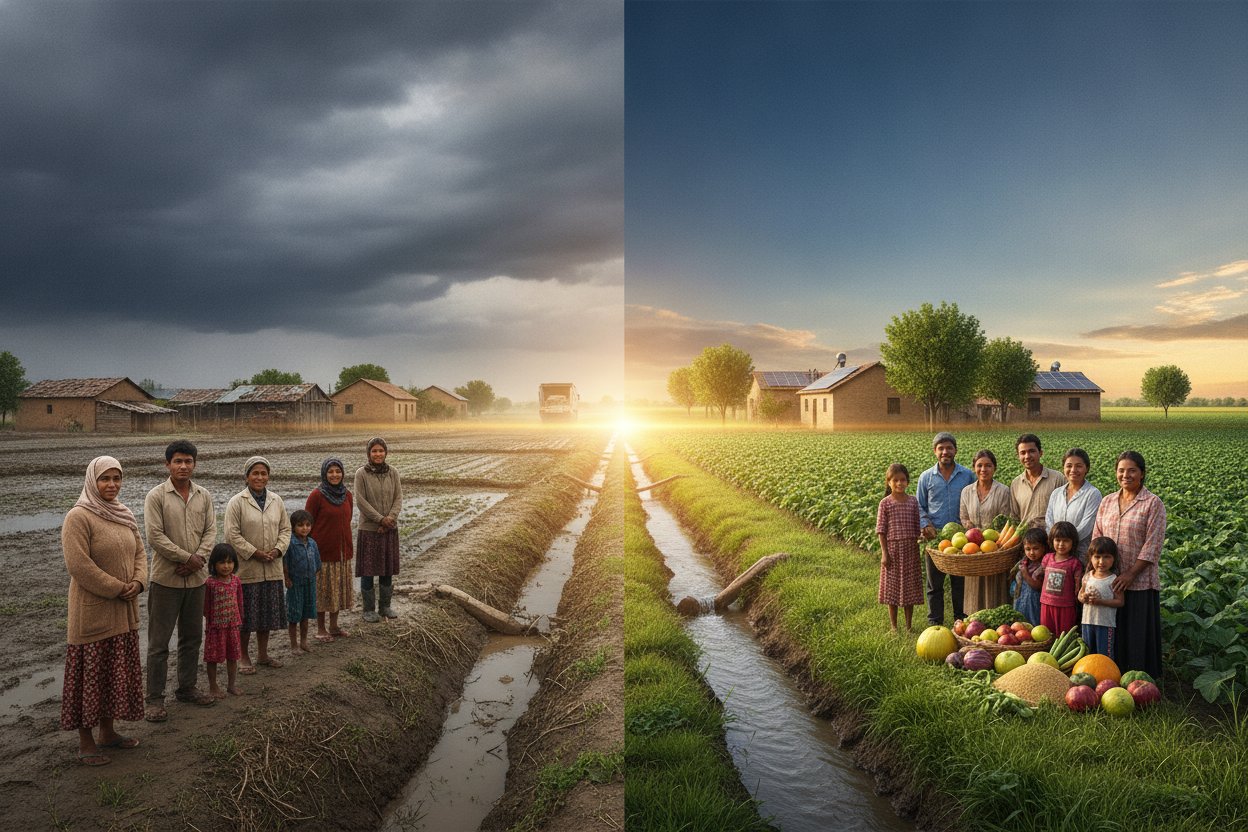
Countries facing the greatest risks from heatwaves, floods, droughts, and rising seas often have the fewest resources to prepare for them. On November 4, 2026, the United Nations Environment Programme released its Adaptation Gap Report 2026: Ready? Not, warning that financial support for developing nations is falling dramatically short of the need (UNEP, 2026).
The report describes an adaptation investment trap. Nations already struggling with climate-related damage must spend more to protect homes, food supplies, water systems, and livelihoods, yet they are receiving too little international help. UNEP stated: “The world is not ready to adapt to current climactic conditions, never mind what overshoot of 1.5°C will bring” (UNEP, 2026).
The Climate Adaptation Funding Gap (UNEP, 2026):
- Needs are rapidly increasing: Developing nations will require an estimated $305 billion each year by 2035 to adapt to escalating climate-driven disasters (UNEP, 2026).
- Available funding is far lower: International public finance for adaptation totaled only $28 billion to $31.7 billion in 2024 (UNEP, 2026).
- Even larger commitments would not close the gap: Tripling current commitments from wealthy nations would cover only 20% to 29% of the needs of the most vulnerable countries (UNEP, 2026).
- The poorest countries received less support: The world’s least developed countries received 16% less adaptation finance in 2024 than they had received two years earlier (UNEP, 2026).
- Vulnerable nations carry a heavier burden: Least developed countries and small island states must spend 3% to 4% of their GDP on adaptation, about twice the relative burden faced by wealthier developing nations (UNEP, 2026).
Why Human Promises Have Not Been Enough
Governments, aid agencies, scientists, and local communities are working to strengthen flood defenses, protect water supplies, improve early-warning systems, and help people prepare for extreme weather. Such efforts can save lives and reduce hardship. But international assistance depends on changing political priorities, national budgets, and voluntary commitments. When wealthier nations focus funding on domestic needs or other concerns, vulnerable communities can be left without the protection they urgently need.
Proverbs 14:31
This proverb shows that God cares deeply about how vulnerable people are treated. Yet the present system has not ensured that protection reaches those who need it most. In 2024, least developed countries received 16% less adaptation support than they had received two years earlier, even as they and small island states needed to spend 3% to 4% of their GDP on adaptation measures (UNEP, 2026). Human institutions may offer important help, but they cannot consistently overcome unequal resources, competing interests, and short-term decision-making.
A Kingdom That Will Protect the Vulnerable
God’s Kingdom will provide the just and compassionate rulership that human governments have never been able to establish fully. Jesus Christ, its King, showed concern for those who were poor, suffering, and overlooked. His government will not be limited by national borders, financial shortfalls, or the willingness of powerful nations to share resources.
Psalm 72:12-13
This promise assures us that no community will be forgotten under God’s Kingdom. People will not have to wonder whether vital protection will arrive after a disaster or whether their country can afford to adapt. God’s government will make sure that the earth’s resources are managed wisely and that every person can live with security.
Hope for a Safe and Restored Earth
The scale of the present gap shows why a lasting solution is needed. Developing nations are estimated to need $305 billion annually by 2035, while international public adaptation finance was only $28 billion to $31.7 billion in 2024 (UNEP, 2026). Even a tripling of wealthy nations’ current commitments would meet only 20% to 29% of the actual needs of the world’s most vulnerable people (UNEP, 2026).
Isaiah 35:1, 6
This prophecy gives a beautiful picture of the earth becoming a secure and fruitful home for people. Those who provide disaster relief, develop practical protections, and support struggling communities deserve appreciation for the help they bring today. Still, the widening adaptation gap shows that human systems cannot guarantee equal safety for everyone. God’s Kingdom offers the sure hope of a restored earth where all people can live free from fear and enjoy true peace and security.