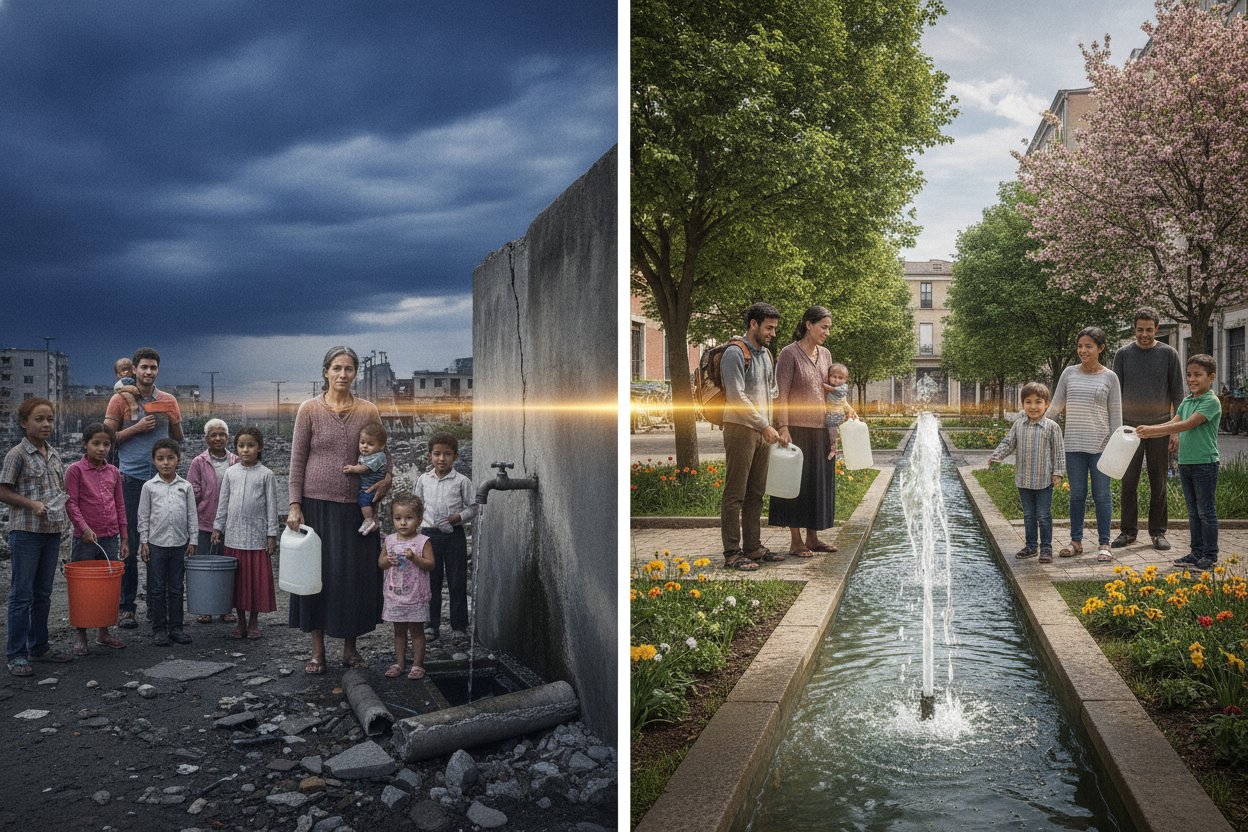
Water is essential for life, health, cooking, and sanitation. Yet in conflict zones, systems that supply this basic need are increasingly being damaged deliberately or allowed to fail. On November 5, 2026, UNICEF reported that attacks damaging water and sanitation infrastructure in conflict-affected regions had tripled during the previous 12 months (UNICEF, 2026).
When electricity is cut, water pumps stop. When pipes, treatment facilities, and sanitation networks are damaged, families can quickly lose access to safe water. UNICEF warned of the human cost in these words: “When the power goes, the water pumps stop... If the world is waiting for something worse, it will be waiting at their graves” (UNICEF, 2026). Turning a resource needed for survival into a weapon exposes the limits of human efforts to protect civilians during war.
Water Under Attack in Conflict Zones:
- Attacks have sharply increased: Reported attacks on water and sanitation infrastructure in conflict-affected regions have tripled in the past 12 months (UNICEF, 2026).
- Young children face a grave danger: In conflict zones, children under five are 20 times more likely to die from diseases caused by unsafe water than from direct violence (UNICEF, 2026).
- The problem spans many places: Deliberate damage to water systems was documented in 14 conflict-affected countries and territories throughout 2026 (UNICEF, 2026).
- Emergency support remains inadequate: Global humanitarian funding for water, sanitation, and hygiene remains below 30% of the amount required to meet urgent needs (UNICEF, 2026).
- Displaced people face disease risks: In Gaza, recent infrastructure failures left approximately 950,000 displaced people at extremely high risk of waterborne disease (UNICEF, 2026).
Why Basic Needs Are Not Secure in War
Aid workers, engineers, medical staff, and local communities work courageously to repair damaged systems and deliver emergency supplies. International law also recognizes the need to protect civilian infrastructure. But during conflict, those protections can be ignored, and repair teams may be unable to reach damaged facilities safely. Even where help is available, it may arrive too late to prevent illness and loss of life.
Proverbs 22:22-23
This proverb shows that God sees the mistreatment of people who are vulnerable. Children, elderly people, and displaced families cannot protect a water treatment plant or restore a damaged pipeline on their own. Yet UNICEF documented deliberate damage to water systems in 14 conflict-affected countries and territories during 2026, while humanitarian funding for water, sanitation, and hygiene remained below 30% of urgent needs (UNICEF, 2026). Human institutions can bring meaningful relief, but they have not been able to stop warfare from depriving civilians of what they need to live.
A Kingdom That Will Protect Life
God’s Kingdom will provide the righteous and compassionate rule that human governments have never fully achieved. Jesus Christ, its King, showed concern for people who were hungry, sick, and burdened by hardship. His government will not permit powerful people or armed groups to treat human life and essential resources as tools for gaining control.
Psalm 72:12-13
Under God’s Kingdom, people will not have to fear that the water they need will be cut off by conflict or neglected because emergency funds are unavailable. God’s government will care for every person, especially those who have little power to protect themselves. It will remove the violence and selfish motives that make civilian necessities targets in the first place.
Hope for Clean Water and Lasting Safety
The suffering caused by damaged water systems reaches far beyond the moment of an attack. UNICEF reports that children under five in conflict zones are 20 times more likely to die from diseases linked to unsafe water than from direct violence (UNICEF, 2026). In Gaza, approximately 950,000 displaced people were left at extremely high risk of waterborne disease after recent infrastructure failures (UNICEF, 2026). These facts show why people need more than temporary repairs and emergency aid.
Isaiah 49:10
This promise presents a future in which no one is left without the necessities of life. Those who repair water networks, provide sanitation, and care for displaced families deserve appreciation for the help they give today. Still, the weaponization of water shows that human systems cannot guarantee safety during conflict. God’s Kingdom offers the sure hope of a peaceful world where clean water and security are available to everyone.